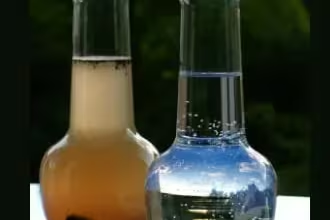



- Different water filtration technologies remove different contaminants, so no single method solves every water quality issue.
- Multi-stage filtration combines complementary technologies to address a wider range of pollutants and household needs.
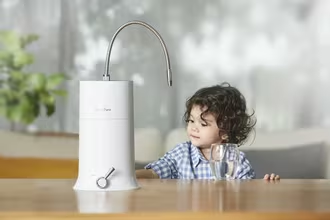
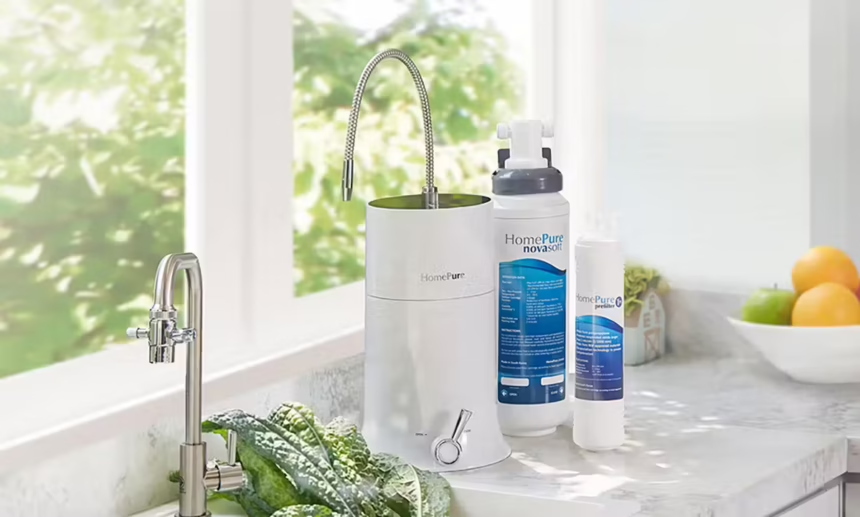
- HomePure Nova pairs ultrafiltration with a 9-stage system to remove contaminants, retain minerals, and deliver safe, great-tasting water.
Walk into any appliance store, and you’re bound to see a wide selection of water purifiers, all touting different filtration technologies.
Some systems use ultraviolet light, while others rely on activated carbon. But what are the pros and cons of each? And are they all designed to cope with the demands of everyday living?
Here’s a look at some of what people around the world consider the best water filters for home use, and why the HomePure Nova is in a class of its own.
Across the World, What are Considered the Best Water Filters for Home?
Activated Carbon
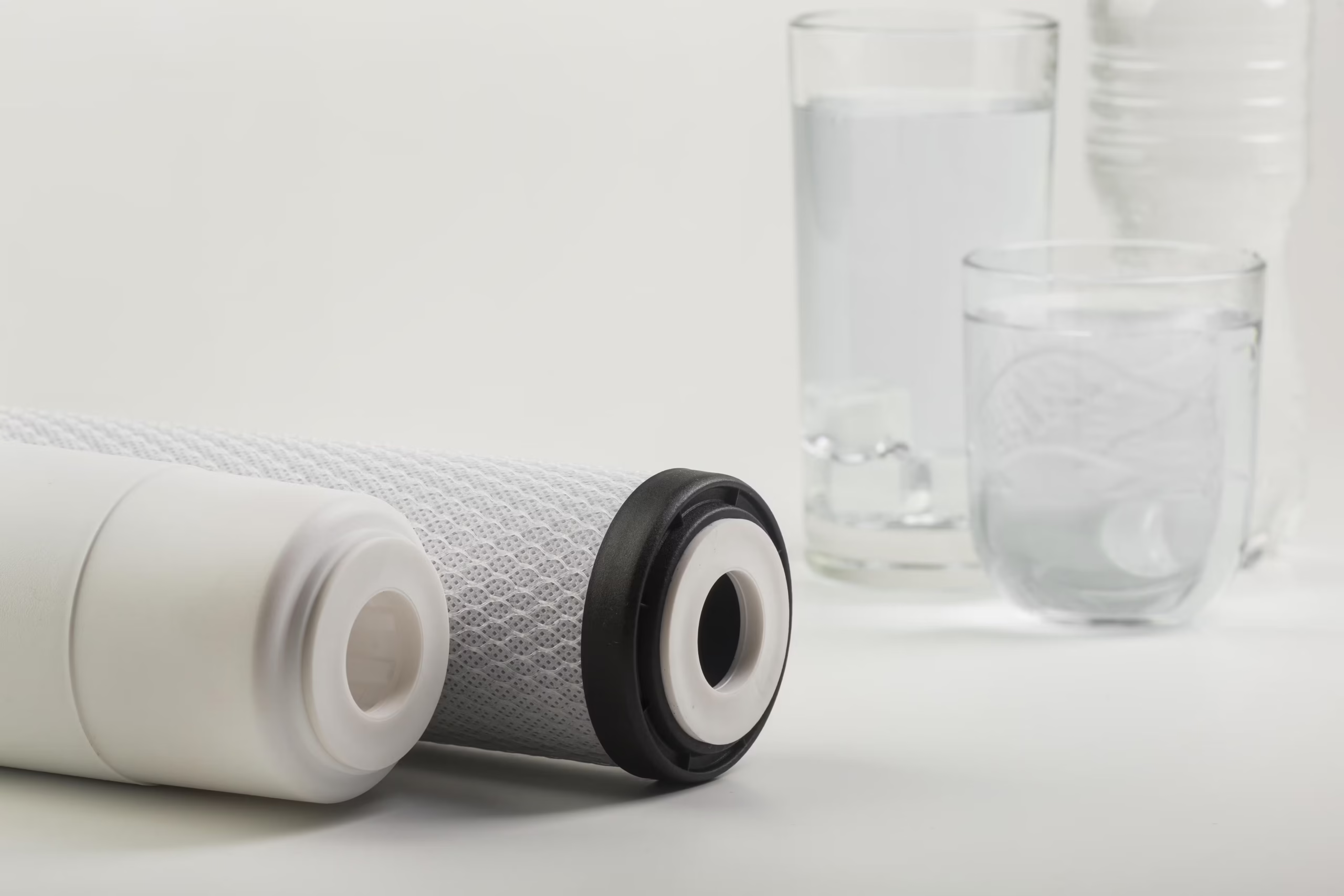
Popular across the world, and especially in North America and Europe, activated carbon filters are effective against contaminants like chlorine, chloroform and magnesium, as well as sediments and unpleasant odours.
The filters essentially work like sponges, with impurities clinging to the carbon’s surface as water flows through. But while this process, known as “adsorption”, is highly effective against a host of pollutants, it can’t reliably remove nitrates (chemicals from fertilisers and animal waste), fluoride, and, importantly, bacteria and viruses.
Ceramic Water Filters
Made from naturally porous ceramic material, ceramic filters work by physically trapping bacteria and sediments in microscopic pores. They’re also long-lasting and affordable, which explains their widespread use in developing regions such as Sub-Saharan Africa and Latin America.
Even so, a key thing to note about ceramic filters is that they aren’t effective against heavy metals, chlorine or dissolved chemicals. They also require regular cleaning and maintenance, while the filtration process can be slow.
Ion Exchange Water Filters
Used for softening hard water (i.e., water with a high concentration of minerals like calcium and magnesium), ion exchange filters swap out the ions that cause water hardness with sodium or potassium ions. This reduces limescale on taps and appliances and improves the feel of water on the skin.
Notwithstanding their wide use in regions with high groundwater mineral content, ion exchange filters aren’t effective against bacteria, viruses, sediment, and most chemical contaminants — a fact that significantly reduces their overall usefulness.
Reverse Osmosis Water Filtration (RO)
RO systems work by forcing water through an extremely fine membrane. These membranes trap contaminants and produce clean, safe drinking water. RO water purifiers are very popular in India and South Asia due to poor water quality in certain regions and the affordability of these systems.
A drawback, however, is that RO systems require significant electricity and water pressure, produce large volumes of wastewater, and strip away beneficial minerals along with harmful ones. They also require regular maintenance.
Ultraviolet (UV) Filters
Popular in the Asia-Pacific region and gaining traction in the Middle East and North Africa, UV water purifiers use ultraviolet light to disrupt the DNA of harmful microbes. This helps render even dangerous bacteria like E. coli harmless.
Despite their benefits, UV filters are only effective against bacteria and viruses and can’t remove sediments, chlorine, lead, pesticides, and other chemical contaminants from water. This limits the appeal of UV filters as a standalone purification solution.
Ultrafiltration Systems (UF)
Commonly used in urban areas worldwide, from Southeast Asia to Europe and North America, UF filters use superfine membranes to trap bacteria, parasites, sediments, microplastics and viruses. In this sense, they work in much the same way as RO systems.
Unlike RO purifiers, however, UF filters don’t require electricity or high water pressure, and don’t produce wastewater. A shortcoming, however, is that most UF systems can’t effectively remove dissolved salts, heavy metals and nitrates.
Are Single-Stage Water Filters Enough?
For the record, all the filtration technologies highlighted are effective in their own way and meet specific needs — whether that’s improving the taste of water, softening hard water or protecting against bacteria and viruses. The problem is that households today don’t just face one water quality challenge but multiple ones.
This is why many people are turning to multi-stage filtration systems, which combine multiple purification methods to address a wide range of issues.
HomePure Nova: Taking Water Filtration Further
Developed in Germany and manufactured in South Korea, the HomePure Nova employs advanced UF technology to remove impurities from drinking water, while retaining essential minerals.
This is achieved via a unique nine-stage filtration system and 35+ Ultratech Fibre Membrane, which are designed to eliminate 99.9999% of bacteria and viruses, including microorganisms below 0.2 microns.
For context, a single strand of human hair is approximately 70 microns wide. So, 0.2 microns is more than 300 times smaller.
All this is certified by international standards and testing bodies such as NSF International, the Water Quality Association (WQA), Korea Conformity Laboratories (KCL) and SGS Hong Kong Ltd.
But what sets the HomePure Nova apart is that, unlike standard UF systems, it combines multiple purification approaches and features in a single appliance. Among these are:

- Sediment Filter — to remove visible particles and rust
- High-Performing Activated Carbon Block Filter — to reduce chlorine, pesticides, heavy metals and organic compounds
- Antibacterial Components (with Microban® antibacterial technology) — to ensure thorough water purification and protect against recontamination
- Pi-Water Ceramics — to restructure water and make it more nourishing
- Coral Sand, Far Infrared Ray (FID) Balls and Negative Ion Balls — to balance pH levels, supply calcium and enhance taste
Another highlight of the HomePure Nova is that this countertop water filter can operate without electricity or pumps, produces no wastewater, and has a filter lifespan of up to 5,000 litres or 12 months (whichever comes first), thereby significantly reducing maintenance costs.
Choosing the Right Water Filtration System
At the end of the day, it’s important to remember that different filtration methods address different water quality issues. Some improve taste and smell, while others focus on eliminating bacteria and viruses.
The key, then, is to understand your household’s needs and strive for a balanced, comprehensive purification system.
The HomePure Nova not only meets these requirements but also ensures clean, safe, and great-tasting water for the entire family.